Fabric families and shopping
The full game includes cotton, linen, wool, silk and velvet. Compare an individual item’s trait bars and cost in the Emporium rather than assuming that every cloth in a family behaves alike.
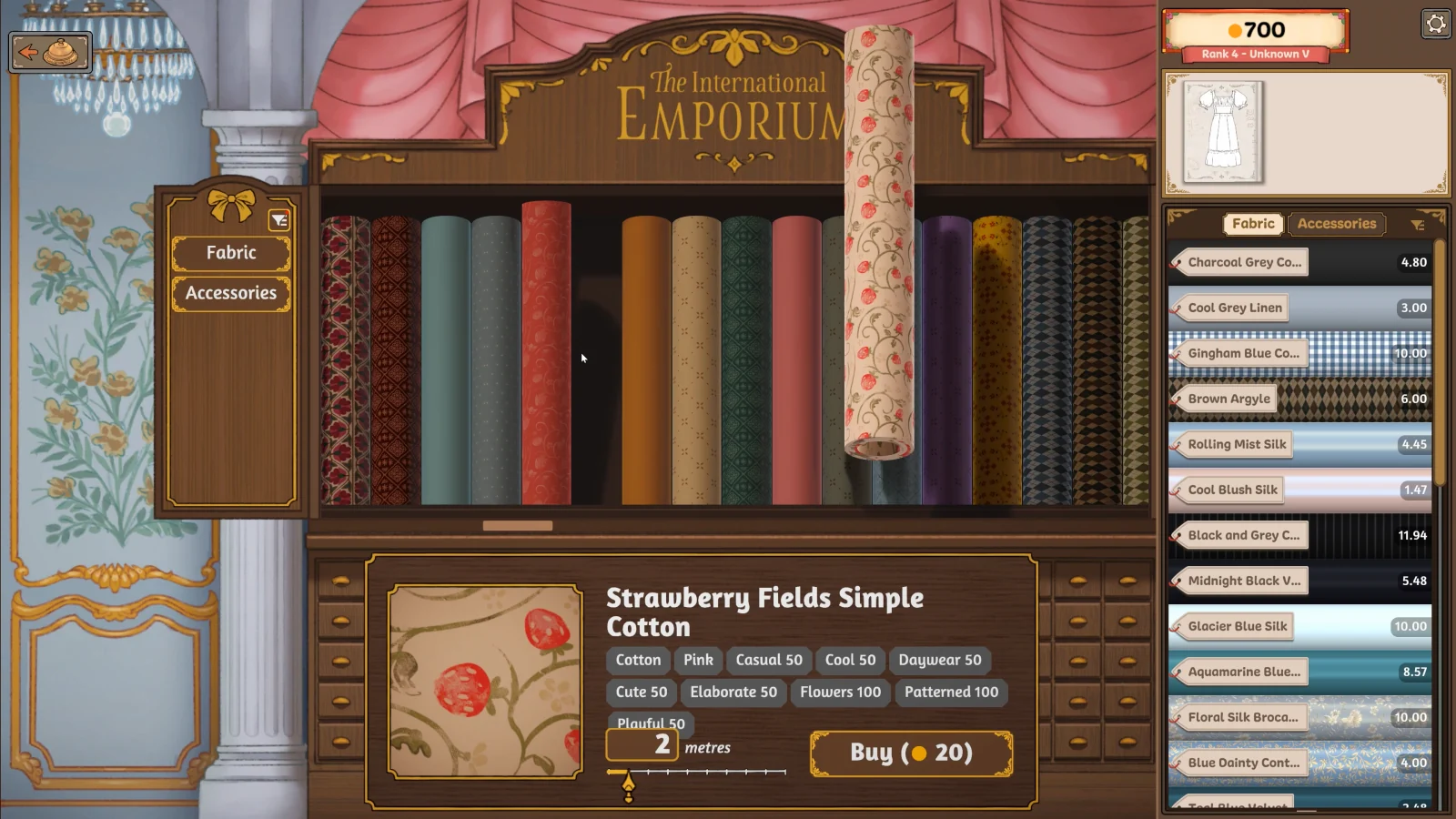
Cotton and linen
Start by comparing these options for everyday commissions. Choose the entry whose traits fit the brief, then check how much the complete pattern layout needs.
Wool and velvet
Compare warmth and other displayed traits before using a heavy fabric across the entire garment.
Silk and mixed designs
Use the request’s material restriction first. For a silk-only brief, do not treat a cheaper non-silk panel as an acceptable substitution.
Example / Strawberry Fields Simple Cotton
The official cutting screenshot lists Casual 50, Cool 50, Daywear 50, Cute 50, Elaborate 50 and Playful 50, plus Flowers 100 and Patterned 100. These are this named fabric’s displayed traits, not universal cotton values.
Pattern pieces and variants
Build the silhouette from bodice, sleeve and skirt choices, adding a collar where the design supports it. Read the trait effect before committing to a shape.
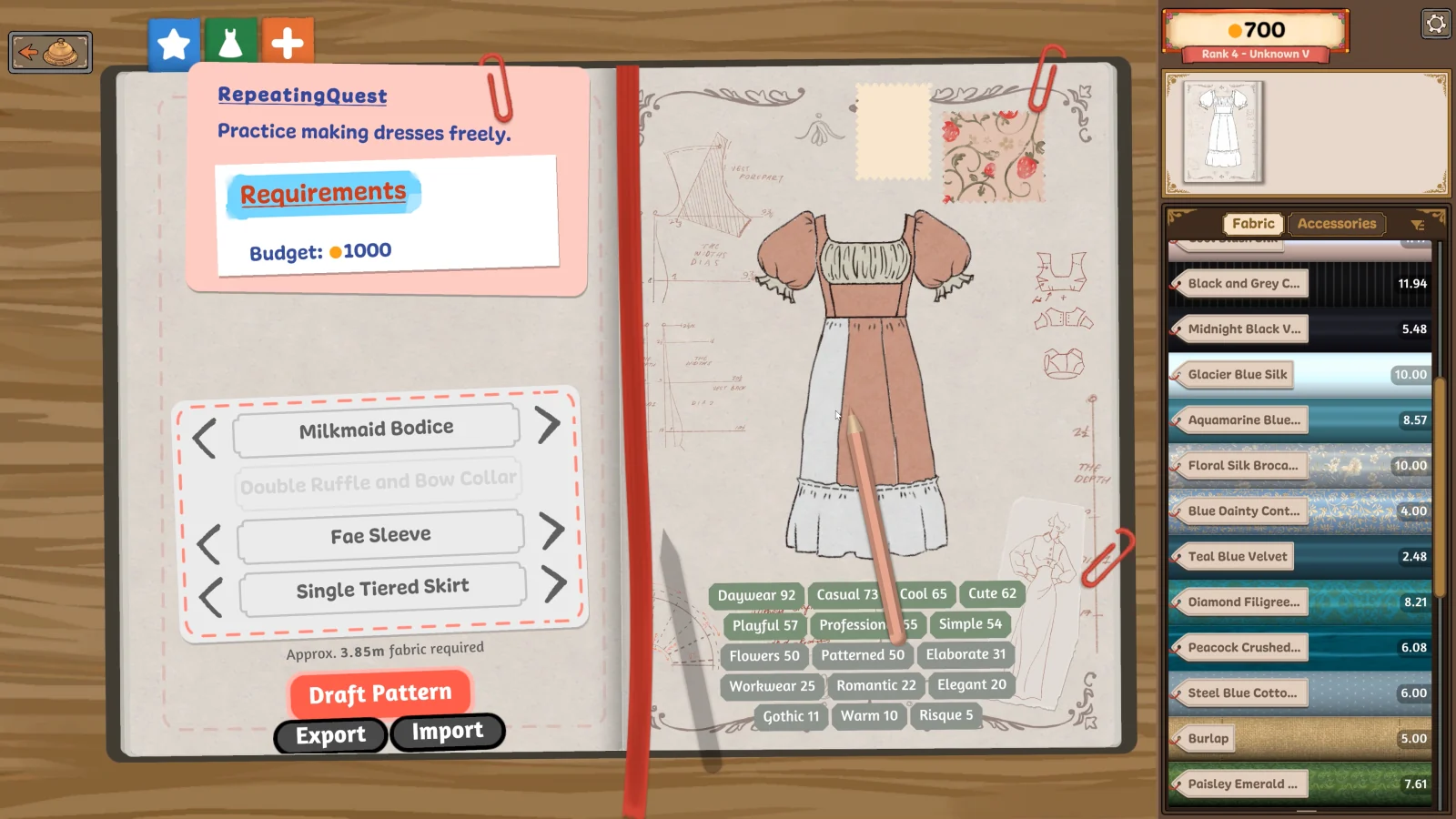
Find variants
The player guide identifies small dots below some design names as additional variants.
Carry your plan forward
Items selected in the sketchbook are starred and move up the cutting or decoration lists.
Read piece placement
Hover over cut pieces to identify their position on the mannequin.
Customers and commissions
Requests give your designs an occasion and a purpose. Keep a record of the brief, the finished garment and the feedback instead of assuming that all customers want the same style.
Decorations and accessories
The full release has 350+ accessories. Separate required decorations from optional finishing touches: a brooch or three bells requested by a commission belongs in the shopping plan from the start. Check the live shop price and remaining budget before adding extra trim.